

journeys of the imagination
Year 1 students have used drawing to tell personal stories both real and imagined. After surveying the drawings of the contemporary artist Tal R, students were encouraged to apply similar techniques in their own drawings. Note the confidence of line and use of bright colours.
See these works in the gallery
 |  |
|---|---|
 |  |
 |  |
 |  |
 |  |
 |  |
 |  |
 |  |
 |  |
 |  |
 |  |
 |  |
 |
self portraits

Portraiture - oil pastels, chalks, pencils, printmaking on paper.
Frida Kahlo’s study of personal identity inspired Year 2 Portraiture. Using mirrors, students drew their own faces, giving consideration to proportion and individuality.
See these works in the gallery
 |  |
|---|---|
 |  |
 |  |
 |  |
 |  |
 |  |
 |  |
 |  |
 |  |
 |  |
 | |
 |  |
 |  |
 |  |
 |  |
 |  |
 |  |
 |  |
 |
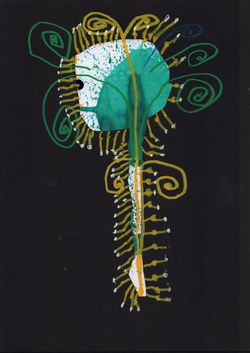
fantasy flowers

Fantasy Flowers - ink and marker pen on paper
The beauty of flowers in their variety of shapes and sizes form the stimulus for this unit of work. Students study mark making by John Olsen and his watery landscapes. This exercise is chiefly the results of controlled play through drawing, painting, and collage techniques.
See these works in the gallery
 |  |
|---|---|
 |  |
 |  |
 |  |
 |  |
 |  |
 |  |
 |  |
 |  |
 |  |
 |  |
 |  |
 |  |
 |  |
 |  |
 |  |
 |  |
 |  |
 |  |
 |  |
 |  |
 |  |
 |  |
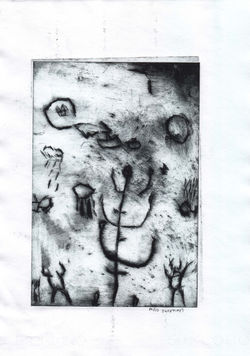
tree of life

Students have studied the motifs associated with the Tree of Life, derived from the Old Testament. Inspired by the abstract imagery of the Australian painter John Coburn (1925-2006), students have drawn their own version of a Tree of Life, incorporating symbols that express the beauty of nature. Students engraved their images onto plastic etching plates and later printed their designs onto rag paper using an etching press. Many of the children’s motifs go beyond the biblical tree and they use the tree symbol to speak about peace and the environment.
See these works in the gallery
 |  |
|---|---|
 |  |
 |  |
 |  |
 |  |
 |  |
 |  |
 |  |
 |  |
 |  |
 |  |
 |  |
 |  |
 |  |
 |  |
 |  |
 |  |
 |  |
 |  |
 |  |
 |  |
 |  |
 |  |
 |  |
 |  |
 |  |
 |  |
 |  |
 |
sea of hands

Studying sculpture in Semester 2, students have worked with a variety of media and techniques including hand building with clay. The study of hands occupies an entire term, as an anatomical study using clay and, as an extension in graphic design using digital media. Students are encouraged to work from a symbolic perspective as hands have often been used in artworks and advertising to represent freedom, empathy, charity, a life force and human emotion.
See these works in the gallery
 |  |
|---|---|
 |  |
 |
pots that tell stories

Pots that Tell Stories is a unit inspired by the Hermannsburg Potters group from Central Australia. The Aboriginal women in this highly acclaimed potting group depict local culture and wildlife from around Hermannsburg.
The pots by Hayley Coulthard, Beth Inkamala, Rahel Ungwanaka, Lindy Rontji, Judith Inkamala and Rona Rubuntjase depict stories; some of which are about flora and fauna, tourism, a love of footy and the influence of Albert Namatjira, a former member of the community who is loved and respected by all.
The History topic, Australia as a Nation allowed for discussion and investigation about Australia’s natural and built environment as well as an exploration of contemporary issues such as refugees and asylum seekers.
See these works in the gallery
 |  |
|---|---|
 |  |
 |  |
 |  |
 |  |
 |  |
 |  |
 |  |
 |  |
 |  |
 |  |
 |  |
 |  |
 |  |
 |  |
 |  |
 |  |
 |
tote bags

In exploring a variety of Pop Art sources that range from Warhol to Shepard Fairey, students developed dynamic designs to apply to their Visual Arts Tote Bags.
The brief for this work involved students selecting a quote and devising an icon like design that would illustrate the central ideas in the quote. These are turned into stencils and applied in two colours to the tote bag.
The juxtaposition of text and image create a clever and at times humorous result that showcase the power of visual communications.
 |  |
|---|---|
 |  |
 |  |
 |  |
 |
pop art tiles
This work was the culmination of a series of material, technical and conceptual explorations of the portrait in art.
Here students created ceramic tiles, which were then incised with the outlines of their own self portrait.
Students were informed by Pop Art in their choice of colours and composition.
 |
|---|

suburbia
Investigating our connections to our immediate contexts and the spaces in which we inhabit, we are able to recognise how these spaces can both shape and reflect our identities.
Students used images of their homes, explored the art practice of Howard Arkley and applied Pop Art sensibilities to developing their paintings.
 |  |
|---|---|
 |  |
 |  |
 |  |
 |  |
 |  |
 |  |
 |  |
 |

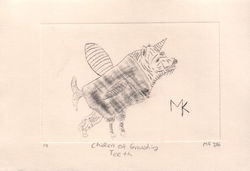
'chimera' - mythical creatures
At the start of the year, we explored mythical creatures, in particular the ‘chimera’ - a creature made up of many other creatures and how they can be used in artworks. We produced our own chimeras by synthesising combinations of different animals using Photoshop. The chimeras were then converted into trading cards, with an ingenious name and granted particular mystical powers. Following from this, we examined various printmaking techniques, such as drypoint printmaking, which involved etching the design into a piece of plastic and printing them using a manual printing press. We also scratched our design free hand into a piece of aluminum. When the etching was complete, the plate was soaked in a solution of ferric chloride, which deepened the etches. The printing process began by pressing ink into the impressions with a squeegee. The excess ink was then rubbed off and paper was prepared for printing. The plate was positioned carefully in the printing press and the design was transferred onto the paper. We were able to produce several editions of our prints and design our own monograms - a decorative version of a person’s initials, and etched them into our plate.
- Visual Arts student
See these works in the gallery
 |  |
|---|---|
 |  |
 |  |
 |  |
 |  |
 |  |
 |  |
 |
vanitas
Students were inspired by 15th Century, Dutch oil painting style ‘vanitas’. Traditional vanitas represent morbid, decaying still life arrangements that touch on scenes of excess and decay. These works were made to remind viewers of the transience of life and the certainty of death. Students used moody, side lighting and off-camera flash to create dark and ominous still life scenes. They carefully constructed decaying symbolic objects, draped backgrounds and powerful monochromatic, colour scenes to portray traditional inspired works. Students extended this idea by creating a twist on the original vanitas to make comments on current world issues, including the fast food epidemic, consumerist society and the hold that technology has on youth.
See these works in the gallery
 |  |
|---|---|
 |  |
 |  |
 |  |
 |  |
 |  |
|
medium format and 35 mm film
Earlier in the year, students visited a range of sites around Sydney, partaking in an ‘on the field workshop’. Students used lomography for the first time, a medium format film. With no viewfinder, only two apertures, and no playback or autofocus, they were challenged and tested with these plastic ‘toy’ type cameras. They successfully used captured leading lines, rule of thirds, double exposures and the peaceful surrounds of the historic Newington Armoury in Homebush. The black and white, 35mm film shots you also see here document the retired White Bay, Power station in Rozelle. Students used SLR cameras and 35mm film. Using the manual mode got students to consider the exposure triangle and how the aperture, shutter speed and ISO work in unison. Using film photography makes students realise the preciousness of film and that every shot counts.
See these works in the gallery
 |  |
|---|---|
 |  |
 |  |
 |  |
 |  |
 |  |
 |  |
 |  |
 |  |
 |  |
 |  |
 |  |
 |  |
 |  |
 |  |
 |  |
 |  |
 |  |
 |  |
 |  |
 |  |
 |  |
 |
limbs

What is Art to me? Art is taking something completely normal and moulding it into something entirely different and extraordinary. This year each student developed a variety of artworks portraying the Old Testament story of the Jewish heroine Judith slaying the Babylonian general Holofornes. During the first term we had to create oil paintings by only depicting abstracted forms to represent the parts of the tale. We learnt how to make nothing into something. Each student took a few ordinary objects, painted them on canvas and created a message that appropriated the Artemisia Gentileschi masterpiece from 1620. In Terms 2-3, we moved on from oil painting inanimate objects to using digital photography and our own limbs (hands and feet mainly) to portray the ancient story. This taught us some new Photoshop skills as well as different ways to communicate a message to an audience. Year 10 Visual Arts has taught me how to take the boring and simple and turn it into something you can look at forever without losing interest, as you try and find the deeper meaning behind what the artist is trying to show you.
Ariella Werner
See these works in the gallery
 |  |
|---|---|
 |  |
 |  |
 |  |
 |  |
 |  |
 |  |
 |  |
 |  |
 |  |
 |  |
 |  |
 |  |
 |  |
 |  |
 |  |
 |  |
 |  |
 |  |
 |  |
 |  |
 |  |
 |  |

propaganda posters
These posters were created as part of a Unit called 'Dissidence and Dreams'. Students learnt about the cultural revolution in China and focused on Australian-Chinese dissident artist Guo Jian. Each students selected a message or cause which they felt strongly about and began to design a poster which would have influence on the viewer. Students painted a self-portrait using oil painting skills they learnt earlier in the year at Art Camp. They then used Photoshop to altered them to fit the propaganda style and aesthetics. Text and other symbols were added, which helped to communicate their overall message.
Hannah Dukes
See these works in the gallery
 |  |
|---|---|
 |  |
 |  |
 |  |
 |  |
 |
amphora
These ceramic based artworks are based on the amphora, an Ancient Greek vessel traditionally used as a storage jar. Each student sculpted their piece, with its neck narrower than the body, using a coil building technique. Students used underglaze and incising in order to decorate their piece alluding to the classical Greek colours of brown, white and black. Students were inspired by British artist, Grayson Perry’s art practice; he utilises the three-dimensional form of the amphora to create a narrative and story of one’s life. He explains the difference between a 'vase' and a pot as being its context, as well as purely the audience’s interpretation.
Mikayla Saks
 |  |
|---|---|
 |